
Outdoor Furniture Selection Prioritizing Ergonomic Comfort Over Visual Trend Cycles
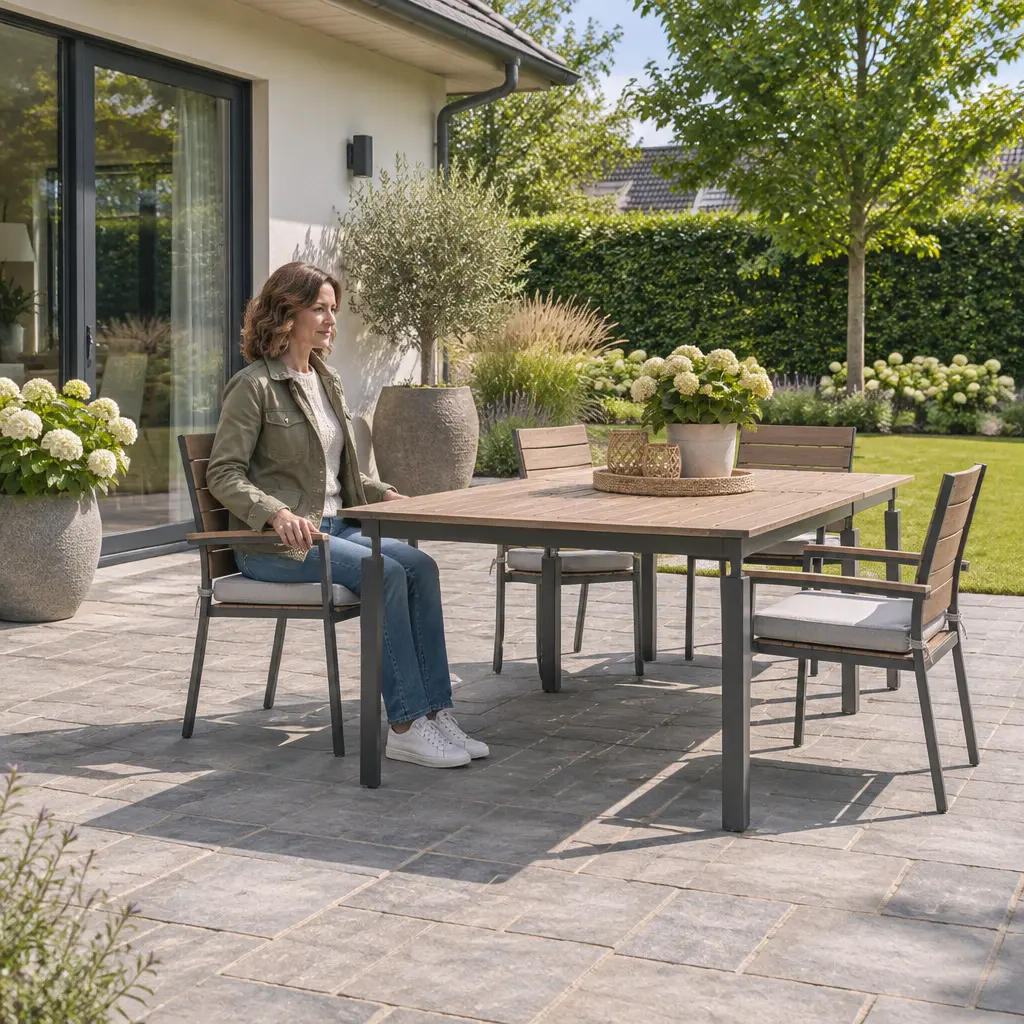
Outdoor furniture ergonomics is the design and selection of patio seating and tables to support comfortable, practical use by different people and activities. Prioritizing ergonomic fit over short-lived visual trends means judging furniture by dimensions, posture, stability, materials, and maintenance before choosing a style. That approach matters because people spend substantial time seated: the U.S. Bureau of Labor Statistics’ American Time Use Survey reports that, in 2023, people age 15 and older spent an average of 2.9 hours per day watching television, much of it while sitting. The figure is not specific to outdoor use, but it underscores why seating comfort deserves attention. The sections below explain ergonomic criteria, compare seating types, and offer a practical selection process.
Ergonomic comfort defines outdoor furniture selection
Ergonomics is the study of how people interact with products and environments, with the aim of fitting the design to people’s capabilities and needs. The International Ergonomics Association describes ergonomics, or human factors, as the discipline concerned with interactions among humans and other elements of a system, applying theory, principles, data, and methods to improve well-being and overall system performance. Applied to outdoor furniture, the principle is straightforward: choose furnishings that suit the people, activities, and conditions of the space rather than selecting primarily for an image or trend.
There is no single seat dimension that fits every body. Comfort depends on the relationship among seat height, depth, width, back angle, armrests, posture, cushions, and the user’s ability to get in and out. A useful evaluation therefore considers more than a product’s advertised style or a single measurement. As a starting point, test furniture with the people who will use it, in the way they expect to use it, and consider whether the layout allows safe access and movement.
Anthropometric fit and accessible use
Anthropometry is the measurement of human body size and proportions; furniture designers use it to inform dimensions such as seat height, depth, and width. Because users vary, assess whether feet can rest comfortably, the seat edge avoids pressing into the backs of the knees, and the backrest supports the user’s preferred posture. Armrests can make sitting down and standing up easier for some people, while a seat that is too low or deep may be difficult for others to use. These are practical fit checks, not universal medical prescriptions.
Accessibility also involves the route to and around furniture. The U.S. Access Board’s accessibility guidance for accessible routes specifies a minimum clear width of 36 inches for many routes, subject to exceptions and additional requirements. That standard applies to covered accessibility contexts, not automatically to every private patio, but it is a useful planning reference. Measure doorways, paths, turning areas, and the space needed to pull out chairs; follow applicable local building and accessibility rules where they apply.
Posture, support, and duration of use
Postural support means that a chair’s seat and backrest make it practical to maintain a comfortable position for its intended use. Dining chairs should allow users to approach a table without awkward reaching, while lounge chairs can support a more reclined posture. For longer conversations or meals, check whether the backrest and seat remain comfortable after several minutes, whether the armrests meet the table appropriately, and whether cushions stay in place. A dramatic recline or deep, soft seat may look inviting but can be awkward for dining or for users who need to rise easily.
Furniture is only one part of ergonomic use. The National Institute for Occupational Safety and Health’s guidance on ergonomics emphasizes fitting tasks and equipment to people to reduce physical strain. For outdoor settings, that principle supports matching furniture to the activity: dining, reading, socializing, or resting. Provide shade where possible and consider how heat, glare, and surface temperature affect comfort; a well-shaped chair cannot compensate for an exposed, uncomfortable setting.
Outdoor seating types translate ergonomic needs into choices
Once fit and activity are clear, seating categories can be compared by how they support different uses. Dining chairs, lounge chairs, benches, and adjustable seats are not interchangeable: each makes trade-offs in posture, access, flexibility, and space. Test the exact product when possible, since measurements and support vary between models even within the same category.
Dining chairs and upright seating
Dining chairs are designed for a relatively upright position and for reaching a table. Check that the seat height works with the table apron and tabletop, that the chair can be pulled in without trapping the user’s legs, and that armrests—if present—fit beneath the table. A chair may feel comfortable alone but become inconvenient when paired with a table of the wrong height or with a tight layout. Verify the entire dining set together rather than selecting pieces independently.
Lounge chairs and recliners
Lounge chairs are intended for relaxed sitting, often with a reclined back and a deeper seat than dining chairs. Adjustable models can accommodate different preferences, but mechanisms should lock securely and be simple to operate. Consider whether the user can reach controls, sit down, and stand up safely. For shared spaces, a mix of upright and reclined options can serve more people than a matching set of one seat type.
Benches, stools, and flexible seating
Benches and stools can make efficient use of space, but they usually offer less individualized back and arm support than chairs. A backless bench may suit short visits or flexible group seating; it may be less suitable for prolonged sitting or for users who benefit from armrests. In a mixed-use patio, combine flexible seating with supportive chairs so that space efficiency does not come at the expense of comfort and access.
Materials and maintenance preserve outdoor comfort
Outdoor furniture must remain comfortable across exposure to sunlight, moisture, temperature changes, and regular cleaning. Material choice affects more than appearance: it can influence heat buildup, surface feel, stability, weight, cushion performance, and upkeep. Product claims should be checked against the manufacturer’s care instructions and the actual climate and exposure conditions of the site.
Frames, stability, and surface temperature
Frame materials include aluminum, steel, wood, and synthetic constructions, each with different maintenance and weight characteristics. Before purchase, sit down and rise from the chair, check for rocking or flex, and inspect joints and feet. In sunny locations, dark or highly exposed surfaces can become uncomfortable to touch; shade, cushions, and material selection can help manage this. Do not assume a material is comfortable or weatherproof based on its name alone—confirm the product’s finish, intended exposure, and care requirements.
Cushions, fabric, and moisture management
Cushions can improve comfort by adding softness and changing how a seat feels, but overly thick or compressible padding may alter seat height and reduce support. Check whether covers can be removed for cleaning, whether the cushion dries appropriately for the local conditions, and whether ties or other features keep it in place. The U.S. Environmental Protection Agency recommends addressing moisture promptly indoors to help prevent mold; although that advice is not an outdoor-furniture standard, the underlying practical lesson is relevant: avoid leaving damp cushions stored in enclosed spaces, and follow the manufacturer’s drying and storage directions.
A practical selection process prioritizes comfort over trends
A repeatable process helps shoppers compare products consistently and avoid buying a visually appealing set that does not fit its users or setting.
- List the primary activities and the people who will use the space, including any mobility or access needs.
- Measure the site, table height, doorways, routes, and clearance for moving chairs and walking around them.
- Try the furniture in person when possible. Sit for several minutes, check foot support and back comfort, and test getting in and out.
- Evaluate the complete arrangement, including chair-table compatibility, shade, lighting, and circulation space.
- Compare materials, cleaning requirements, replacement-part availability, and storage needs against local weather.
- Choose a durable, adaptable design in a style you like after the functional requirements are met.
A simple comparison chart can make the decision visible: list each candidate’s seat height, seat depth, back support, armrests, adjustability, material, care needs, and price. These measurements are most useful as comparison points—not as a substitute for testing or as guarantees of fit. For shared or multigenerational spaces, consider varied seating rather than expecting one design to serve everyone equally well.
Conclusion: ergonomic outdoor furniture supports lasting use
Ergonomic outdoor furniture selection begins with fit, posture, activity, and access, then weighs seating type, materials, climate, and maintenance. Anthropometric fit and accessible routes help users approach and use furniture; appropriate support makes seating more practical for its intended duration; and careful material choices help preserve comfort outdoors. Rather than treating visual trends as the starting point, measure the space, test the furniture, and compare care requirements before purchasing. Consult the U.S. Access Board’s guidance when accessibility standards may apply, and review product instructions for safe use and maintenance.
Sources: International Ergonomics Association, “What Is Ergonomics (HFE)?”, https://iea.cc/about/what-is-ergonomics/; U.S. Bureau of Labor Statistics, American Time Use Survey—2023 Results, https://www.bls.gov/news.release/atus.nr0.htm; U.S. Access Board, Guide to the ADA Accessibility Standards: Accessible Routes, https://www.access-board.gov/ada/guides/chapter-4-accessible-routes/; National Institute for Occupational Safety and Health, Elements of Ergonomics Programs, https://www.cdc.gov/niosh/docs/97-117/; U.S. Environmental Protection Agency, A Brief Guide to Mold, Moisture and Your Home, https://www.epa.gov/mold/brief-guide-mold-moisture-and-your-home/
Related Post

Mistakes That Make Your Outdoor Furniture Look Dated
Outdoor furniture is the collection of movable seating, tables, shade structures, and accessories designed for [...]

Bold Textures Making Decks Look Expensive on a Budget
Deck Design: Bold Textures That Make Outdoor Spaces Look Expensive on a Budget Deck design [...]

Easy Ways to Create a Magical Outdoor Dining Atmosphere
A magical outdoor dining atmosphere is a deliberately designed combination of light, sound, scent, texture, [...]