
What Interior Designers Won’t Tell You About Outdoor Screens
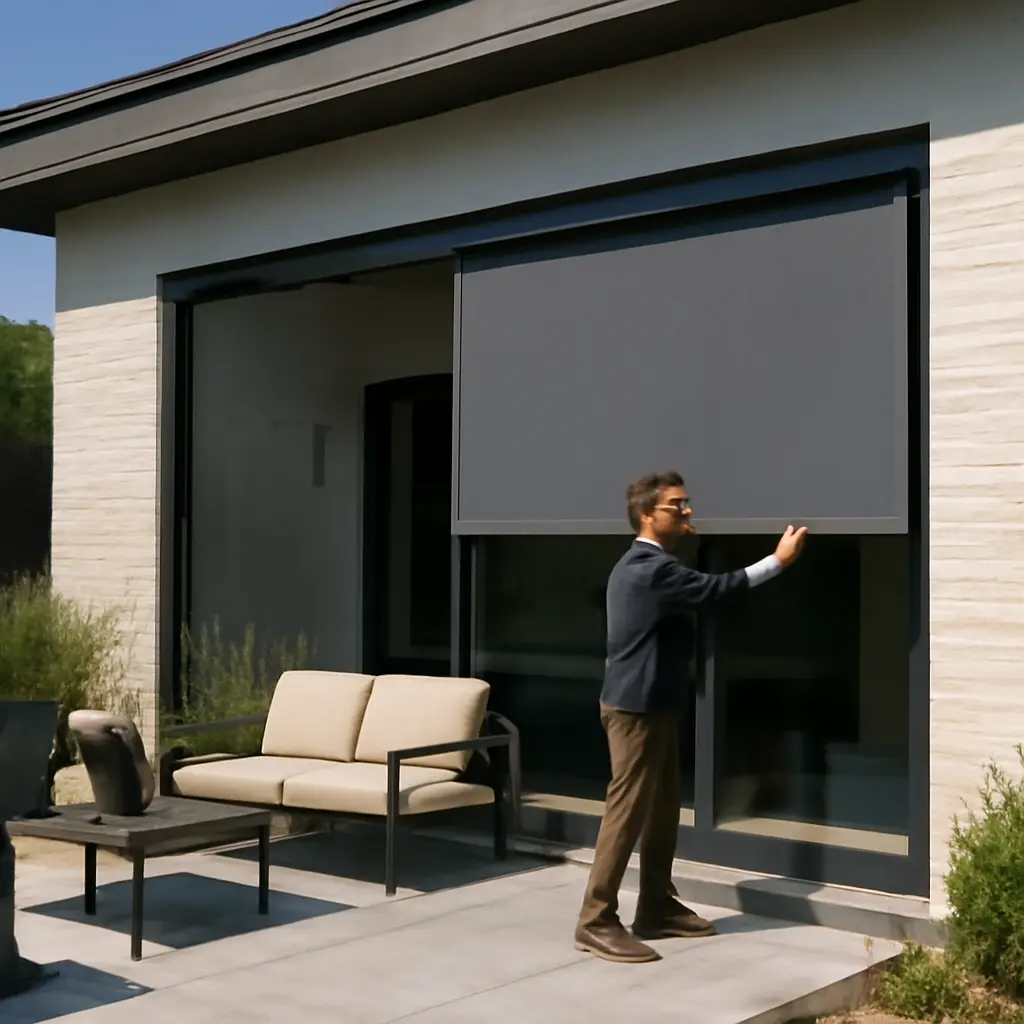
Outdoor screens are adjustable shading and privacy systems—such as retractable exterior shades, screens, and shutters—installed on the outside of a building. Their less-discussed truth is that performance depends on more than fabric color or a designer’s render: orientation, wind exposure, openness, controls, installation, and maintenance determine whether they reduce glare and heat or become an expensive frustration. The U.S. Department of Energy notes that exterior shading can be more effective than interior window coverings at reducing solar heat gain because it blocks sunlight before it passes through the glass. That makes outdoor screens worth considering, but not a universal solution: the right product must match the window, climate, exposure, and way a household uses the space.
How Outdoor Screen Performance Depends on Solar Control
Solar control is the ability of a screen system to manage incoming sunlight, glare, and heat. The U.S. Department of Energy explains that awnings and other exterior shading devices reduce solar heat gain by intercepting sunlight before it enters a window. The benefit varies with window direction, season, screen material, and how much of the opening is covered; a screen cannot be assigned one guaranteed energy-saving percentage without evaluating those conditions.
The main outdoor-screen types include roller screens, retractable awnings, exterior shutters, and fixed solar screens. They share a shading purpose but behave differently: a roller screen can filter light while preserving a view, an awning projects shade beyond the window, and shutters can provide a more substantial barrier when closed. Designers should distinguish between a screen’s openness, its optical properties, and the amount of the window it actually covers.
Solar orientation changes the result
A screen’s effectiveness depends partly on when and where direct sun strikes the glass. South-facing windows in the Northern Hemisphere often receive strong high-angle sun, while east- and west-facing windows can be harder to shade because lower-angle morning or afternoon sun reaches beneath or around some systems. The U.S. Department of Energy’s guidance on window attachments emphasizes that shading decisions should account for orientation and local climate, not just appearance.
For example, a horizontal awning may block high summer sun but allow lower winter sun to enter, which can be useful in some climates. A vertical exterior screen may be more appropriate for low-angle glare on a west-facing window. These are design tendencies, not guarantees: nearby buildings, trees, balconies, and the screen’s projection or side gaps can change the outcome.
Openness balances view, airflow, and shade
Openness factor describes the proportion of a screen fabric’s area that consists of openings. A more open fabric generally preserves more outward visibility and airflow but allows more sunlight through; a tighter weave typically provides greater glare and privacy control while reducing the view. The actual effect also depends on fabric color, yarn, angle of the sun, and the brightness difference between indoors and outdoors.
The phrase “one-way privacy” can be misleading. During daytime, a brighter exterior and darker interior may make it harder for people outside to see in through a mesh screen, but the effect can reverse at night when interior lights are on. Screens also do not necessarily provide meaningful privacy at oblique angles or when viewed from a nearby elevated position. Test a sample at the actual window, both day and night, before choosing a fabric.
How Outdoor Screen Durability Depends on Wind and Installation
Durability is a screen system’s ability to withstand its site conditions over time, including wind, rain, ultraviolet exposure, temperature changes, and repeated operation. It depends on the complete assembly—not simply the fabric—including brackets, fasteners, side channels, cassette, motor, and the structure receiving the load. The Federal Emergency Management Agency warns that wind can damage building components and that properly designed attachment and anchorage are essential to resisting wind forces.
Outdoor screens are not all rated for the same wind conditions. A product’s allowable operating conditions, testing standard, and warranty exclusions should be reviewed for the specific model and installation. A wind sensor is a useful control, but it is not a substitute for suitable product selection, secure installation, or following the manufacturer’s instructions.
Wind exposure is a design input, not an afterthought
Wind exposure describes the force and direction of wind a screen may encounter at its location. A sheltered courtyard, a coastal home, and a high-rise balcony present different conditions. Corner locations, upper floors, open terrain, and gaps between buildings can create stronger or more turbulent airflow than a product showroom suggests.
Before purchase, ask the installer for the product’s documented wind limits and whether those limits refer to operation, survival, or both. Ask how the system should be positioned during storms, whether side retention is required, and what substrate and fasteners are specified. If a screen is mounted to masonry, siding, or a rainscreen assembly, the installer should account for the actual construction rather than relying on a generic anchor assumption.
Installation determines whether the system works as intended
Installation is the process of attaching, aligning, sealing, and commissioning the screen and its controls. Poor alignment can cause uneven movement, fabric tracking problems, excess friction, or gaps that undermine shading. Incorrect fastening can also transfer loads into unsuitable cladding rather than the structural support behind it.
A careful specification identifies the mounting surface, attachment method, required clearances, drainage considerations, and access for servicing. For motorized systems, commissioning should verify travel limits, obstruction behavior, control pairing, and any wind or sun sensors. A useful handover includes the operating instructions, product documentation, warranty, and maintenance schedule—not just a demonstration of the remote control.
How Outdoor Screen Materials Affect Comfort and View
Screen material is the fabric, mesh, or slatted surface that filters or blocks light. Its performance involves more than a color name: openness, solar and visible-light transmission, reflectance, durability, cleanability, and compatibility with the frame all matter. The National Fenestration Rating Council explains that window-product ratings use standardized measures such as solar heat gain coefficient and visible transmittance; however, an exterior screen’s effect on the complete window should be evaluated using product-specific information rather than assuming the window rating alone describes the combination.
Common choices include woven mesh, coated technical fabrics, and rigid slats or shutters. Mesh is often selected to balance shade and view; coated fabrics may offer greater resistance to weather and easier cleaning; shutters can provide stronger light blocking but may be bulkier or less visually transparent. Performance and appearance vary by manufacturer and product line.
Color affects both appearance and visibility
Fabric color influences how a screen looks from inside and outside and can affect perceived contrast and outward visibility. Darker mesh often makes it easier to see through because it reduces reflected light at the viewing surface, while lighter fabric can reflect more light and may appear brighter. These are common optical tendencies, not universal rules; yarn construction and the scene’s lighting also matter.
A small sample viewed indoors under showroom lighting is not enough to predict the result. Compare samples against the actual window and exterior view, and check them in direct sun, overcast conditions, and at night with interior lighting. Also consider how the color reads from the street: screens that look discreet from inside may be visually prominent across a façade.
Screens can reduce glare without making a room dark
Glare control means reducing uncomfortable brightness or contrast in a field of view. A screen may soften direct sun while preserving diffuse daylight, but a denser fabric can also reduce the amount of daylight entering the room. The appropriate balance depends on room use: a television room, home office, and kitchen may have different needs at different times of day.
The U.S. Department of Energy advises that window coverings can help manage heat and light, while noting that exterior shading intercepts sunlight before it reaches the glass. A practical design may use screens only on the most exposed windows, or pair them with interior curtains for nighttime privacy and occasional blackout. Avoid promising a specific cooling or energy-bill reduction without a building-specific assessment.
How Outdoor Screen Controls Affect Everyday Use
Controls are the devices and settings used to raise, lower, or adjust a screen, including manual cranks, wall switches, remotes, and automation. They shape whether the system is used consistently. A theoretically effective screen left unused because it is difficult to reach may deliver less practical benefit than a simple system that occupants operate when sunlight becomes uncomfortable.
Control options include manual operation, motorization, timers, sun sensors, and integration with home-automation platforms. Automation can respond to light or weather inputs, but it depends on sensor placement, calibration, power, communication, and a user’s preferred settings. Product compatibility and local electrical requirements should be confirmed before specifying a motorized system.
Motorization adds convenience and maintenance needs
Motorization uses an electric drive to move the screen, reducing the need for manual effort and making higher or wider openings easier to manage. It can be especially useful for multiple screens or windows that are difficult to reach. But motors, power supplies, switches, and communication components add cost and introduce parts that may eventually require service.
Before selecting a system, ask whether the motor is hardwired or battery-powered, how it can be operated during a power or network outage, and whether replacement parts will remain available. Confirm that the installer demonstrates manual override or emergency procedures where the product provides them. A smart-home feature should be treated as a convenience, not the sole way to operate an essential screen.
Sensors need sensible settings and realistic expectations
A sun sensor can raise or lower a screen based on measured brightness, while a wind sensor can trigger a protective response when conditions exceed a setting. Neither sensor knows the occupants’ preferences automatically. A sun sensor may deploy a shade when daylight is welcome, and a wind sensor cannot protect against every gust, power failure, or installation weakness.
Set automation around the building’s exposure and daily routine, then observe it through different weather. Owners should know how to override the system and what to do when a sensor, motor, or network connection fails. Ask the supplier which functions operate locally and which depend on an internet connection or third-party service.
How Outdoor Screen Costs Extend Beyond the Purchase Price
Total cost of ownership includes the initial product and installation as well as controls, electrical work, cleaning, repairs, and eventual replacement. Prices vary substantially with dimensions, material, motorization, mounting complexity, site access, and local labor. There is no reliable universal price or payback period that applies to every home.
The U.S. Energy Information Administration’s Residential Energy Consumption Survey tracks household energy use and end uses, illustrating that heating and cooling loads vary with home and climate characteristics. That is why an outdoor screen should be evaluated as part of a particular building’s comfort and energy strategy, not sold with a blanket promise of a fixed reduction in bills.
A quote should specify the complete system
A useful quote itemizes the screen, frame or cassette, brackets, fasteners, motor and controls, electrical work, access equipment, installation, and commissioning. It should identify product dimensions, fabric specification, warranty terms, wind guidance, and exclusions. Comparing only headline prices can be misleading if one quote omits wiring or structural preparation that another includes.
Request separate pricing for optional automation and for any required electrical or building work. If the project involves a condominium, historic property, or shared façade, confirm approval requirements before ordering. Exterior changes may be subject to homeowners’ association rules, landlord consent, building codes, or local planning controls.
Maintenance affects lifespan and warranty coverage
Maintenance includes cleaning, inspection, and timely correction of wear or operating problems. Dust, pollen, salt, and pollution can accumulate on exposed fabrics and hardware; coastal or industrial environments may place additional demands on materials and finishes. Follow the manufacturer’s cleaning instructions because harsh chemicals, pressure washing, or improper lubrication can damage components or affect warranty coverage.
Owners should periodically check for loose brackets, frayed or distorted fabric, unusual motor noise, blocked drainage, and uneven movement. A screen that begins to bind or track inconsistently should be inspected rather than repeatedly forced. The specific maintenance interval depends on the product and exposure, so use the manufacturer’s instructions as the authority.
How to Specify Outdoor Screens Without Design Surprises
A successful specification translates the room’s needs and site conditions into measurable product requirements. Before choosing a finish, identify the problem to solve—glare, heat, privacy, fading, or outdoor comfort—and establish which trade-offs are acceptable. The U.S. Department of Energy’s guidance on shading supports a context-based approach: orientation, climate, and the type of window treatment all matter.
Use a room-by-room assessment
A room-by-room assessment records window orientation, direct-sun hours, occupants’ routines, view priorities, privacy needs, and nearby obstructions. It helps avoid treating every façade alike. A west-facing office with afternoon screen glare may need a different fabric and control strategy from a shaded bedroom that prioritizes nighttime privacy.
Ask the designer or installer to explain the selected openness, color, mounting method, and operating plan in relation to each window. Where practical, test a full-size or representative sample on site. A product demonstration should show the view from inside and the appearance from outside, rather than relying solely on a digital rendering.
Verify approvals, safety, and documentation
Exterior screens can affect the building envelope and appearance, so verify approvals before installation. The International Code Council’s model codes provide a framework for building safety, but the applicable rules depend on the jurisdiction and adopted code edition. Local authorities and building management determine which requirements apply to a specific project.
For motorized or cord-operated products, request information about safe operation, child safety where relevant, electrical requirements, and service access. Keep the final product schedule, installation details, operating instructions, and warranty in one place. These records help owners troubleshoot problems and make future repairs or replacements more straightforward.
Conclusion: Outdoor Screens Work Best When Their Trade-Offs Are Visible
Outdoor screens can intercept sunlight before it reaches the glass, improve glare control, and support privacy and comfort. Their real-world performance, however, depends on solar orientation, fabric openness and color, wind exposure, structural attachment, controls, and ongoing care. The most important “inside information” is that no attractive sample or generic energy claim can substitute for a site-specific specification.
Before buying, define the problem for each room, review documented product and wind guidance, compare complete installed quotes, test material samples in place, and confirm approvals and maintenance requirements. For further guidance, consult the U.S. Department of Energy’s window-covering resources, the product manufacturer’s technical documents, and a qualified local installer. That due diligence makes it more likely that a screen will perform as well as it looks.
Sources: U.S. Department of Energy, Energy Efficient Window Coverings, https://www.energy.gov/energysaver/energy-efficient-window-coverings; U.S. Department of Energy, Window Attachments, https://www.energy.gov/energysaver/window-attachments; Federal Emergency Management Agency, Building Science: Wind, https://www.fema.gov/emergency-managers/risk-management/building-science/wind; National Fenestration Rating Council, Understanding NFRC Ratings, https://www.nfrc.org/consumer/understanding-nfrc-ratings/; U.S. Energy Information Administration, Residential Energy Consumption Survey, https://www.eia.gov/consumption/residential/; International Code Council, International Building Code, https://www.iccsafe.org/products-and-services/i-codes/2024-i-codes/
Related Post

Real Apartment Dwellers Share Their Terrace Transformations
Apartment Terrace Transformations: Real Dwellers Share Small-Space Outdoor Makeovers Apartment terrace transformations are resident-led changes [...]

Bold Textures Making Decks Look Expensive on a Budget
Deck Design: Bold Textures That Make Outdoor Spaces Look Expensive on a Budget Deck design [...]

Mistakes Brands Make When Following Outdoor Trends
Outdoor brands are companies that design, manufacture, distribute, or market products and experiences for activities [...]