
Common Mistakes People Make Choosing Outdoor Coffee Tables
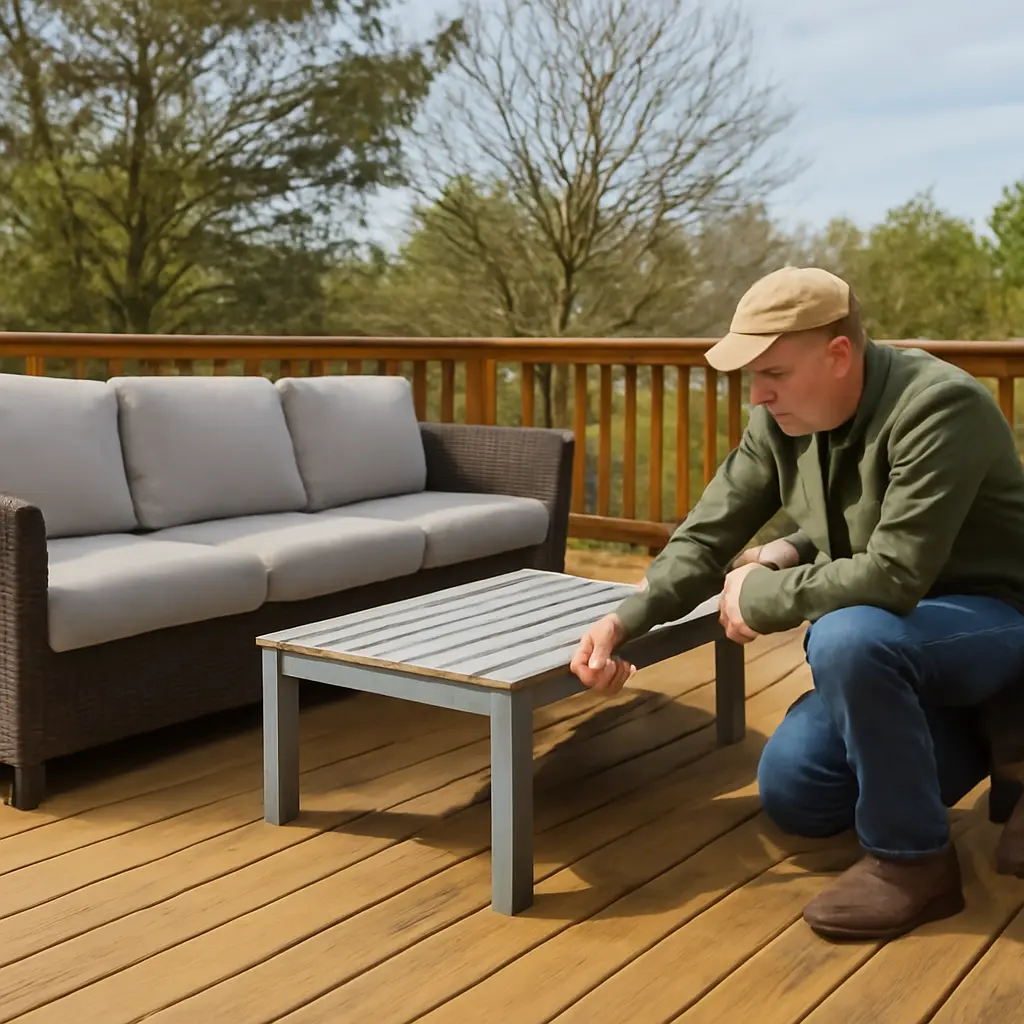
Outdoor coffee tables are low tables designed for use in open-air seating areas, where they support drinks and other small items while being exposed to weather, sunlight, and everyday wear. People often choose one by appearance alone, but common mistakes include overlooking dimensions, material durability, drainage, stability, and maintenance. Those oversights matter: the U.S. Environmental Protection Agency reports that sunlight and moisture can accelerate the deterioration of outdoor materials, while the American Society of Landscape Architects consistently identifies comfortable, functional outdoor living areas as an important residential design feature. Choosing well means matching a table’s size, construction, and care requirements to its setting and use.
Outdoor Coffee Table Dimensions and Layout
Dimensions describe a table’s height, width, length, and footprint in relation to nearby furniture. For an outdoor coffee table, the right dimensions let people reach drinks comfortably while preserving enough room to move around chairs and sofas. The National Kitchen & Bath Association’s planning guidance commonly recommends allowing about 36 inches for a comfortable passageway, though a compact patio may require a practical compromise.
Choosing a table that is too large
An oversized table can block circulation, crowd seating, and make a small deck feel smaller. Measure the usable seating area—not just the patio’s outer dimensions—and account for chair legs, reclined positions, door swings, and routes to stairs or outdoor kitchens. A useful check is to mark the proposed footprint with painter’s tape before buying. If people cannot walk around it without turning sideways or bumping furniture, choose a smaller or more compact shape.
Choosing a table that is too small, tall, or low
A table that is too small may not serve the number of seats around it; one at the wrong height can be awkward to use. As a practical starting point, many coffee tables sit close to the height of the seat cushions or slightly lower. Measure the actual outdoor sofa and chairs, since cushion thickness and sag can change the effective seat height. For sectional furniture, compare the table’s length and shape with the open seating area rather than selecting by a product photo alone.
Outdoor Coffee Table Materials and Weather Resistance
Material choice describes the table’s main construction and how it responds to rain, sun, temperature changes, and corrosion. The Federal Trade Commission’s Green Guides caution against broad, unqualified environmental claims, and the same practical care applies to product claims such as “weatherproof”: check what the manufacturer actually says about exposure, finishes, and upkeep. No material is maintenance-free in every climate. The common categories include wood, metal, synthetic resin, and stone or concrete.
Assuming every wood table can stay outdoors year-round
Wood tables vary in density, natural durability, finish, and care needs. Teak is often selected for outdoor use because its natural oils help it tolerate exposure, but it can still weather and change color. Other woods may need periodic sealing or protective coatings. The U.S. Forest Products Laboratory explains that moisture cycling can cause wood to swell, shrink, crack, or warp; therefore, check the care instructions and decide whether seasonal covering or indoor storage is realistic before buying.
Ignoring rust, fading, and heat in metal and resin
Metal tables can be sturdy, but the type of metal and quality of the finish matter. Steel may rust if its coating is chipped; aluminum is lighter and does not rust in the same way, though it can corrode under some conditions. Synthetic resin is often lightweight and easy to clean, but prolonged ultraviolet exposure can fade or weaken lower-quality products. Check the warranty and stated UV and corrosion protections, and consider whether a lightweight table could shift in strong winds.
Overlooking drainage and surface care
A tabletop that holds standing water can collect dirt, stain, or freeze in cold weather. Slatted, perforated, or slightly crowned tops may shed water more readily, depending on their design. Stone and concrete can be heavy and stable, but porous surfaces may stain and require a suitable sealer. The National Park Service’s preservation guidance emphasizes that materials and finishes need care appropriate to their exposure; for a household table, the equivalent lesson is to follow the maker’s cleaning and sealing instructions rather than assume a surface is impervious.
Outdoor Coffee Table Stability and Safety
Stability is a table’s ability to remain level and resist tipping or shifting during ordinary use. It depends on the base design, weight distribution, floor surface, and how people interact with the table. These factors are especially important on balconies, raised decks, and patios exposed to wind. A table should support routine use without sharp edges, loose joints, or a base that obstructs feet.
Choosing a lightweight table for a windy location
Lightweight furniture is easier to move, but it can slide or tip in gusts. The National Weather Service notes that wind force increases with wind speed, so even ordinary outdoor objects can become hazards in severe weather. For exposed patios, look for a broad, well-balanced base or a heavier construction, and move or secure furniture when strong winds are forecast. Avoid relying on glass tops or loose decorative pieces where they could be displaced.
Forgetting edges, glass, and everyday use
A table’s safety is not determined by weight alone. Sharp corners can be uncomfortable in tight seating arrangements, while a glass top needs secure support and appropriate outdoor-rated construction. Check that joints do not wobble, the base sits evenly on the patio surface, and the tabletop remains stable when someone reaches across it. If children use the area, rounded edges and durable materials can reduce common bumps and breakage risks.
Outdoor Coffee Table Function and Maintenance
Function covers how a table supports the activities planned for the space; maintenance covers the work required to keep it usable. A frequent mistake is buying a visually appealing table without considering whether it has enough surface area, storage, or convenient access. Matching the table to its purpose—from casual drinks to outdoor dining—helps avoid premature replacement and unnecessary upkeep.
Buying for looks instead of the way the space is used
A decorative table may not provide enough room for cups, serving trays, books, or games. Measure the items people actually use and consider whether a lower shelf or concealed storage would help. If the table will double as a dining surface, check its height and clearance rather than assuming a standard coffee-table design will work. For a narrow balcony, a smaller nesting pair or an oval top may preserve more usable circulation than a large rectangular piece.
Underestimating cleaning and seasonal care
Maintenance requirements differ: wood may need cleaning and refinishing, metal may need coating repairs, and textured surfaces can trap debris. Before buying, check the manufacturer’s cleaning directions, replacement-part availability, and warranty exclusions for weather exposure. Consider the local climate, including freeze-thaw cycles, salty coastal air, and intense sun. A cover can help, but only if it fits and does not trap moisture against the table.
A Practical Outdoor Coffee Table Buying Check
A short pre-purchase check can prevent the most common mismatches. Compare product dimensions with the seating area, verify the material’s exposure limits, and confirm that the table’s weight and base suit the location. The table below summarizes the principal trade-offs; it is a general guide, not a substitute for a specific product’s care instructions.
| Material | Common advantage | Common consideration |
|---|---|---|
| Teak and other outdoor-rated wood | Natural appearance; some species tolerate exposure well | May weather, need cleaning, or require periodic care |
| Aluminum | Lightweight and resistant to rusting compared with ordinary steel | May shift in wind; finish and construction still matter |
| Coated steel | Often sturdy and substantial | Coating damage can expose metal to corrosion |
| Synthetic resin | Often easy to clean and move | UV durability and wind stability vary by product |
| Stone or concrete | Heavy, stable, and visually substantial | Can be difficult to move; porous surfaces may stain |
Conclusion: Choose an Outdoor Coffee Table for Its Setting
The most common outdoor coffee table mistakes are poor sizing, unsuitable materials, weak stability, inadequate drainage, and overlooked maintenance. Measure the layout and seating first, then compare materials with the local weather and the care you are willing to provide. Check the product’s exposure guidance, warranty, and construction before purchasing. These simple steps help create an outdoor seating area that is comfortable, practical, and more likely to last; measure your space, review the manufacturer’s specifications, and choose accordingly.
Sources: U.S. Forest Products Laboratory, Wood Handbook: Wood as an Engineering Material, https://www.fpl.fs.usda.gov/documnts/fplgtr/fpl_gtr282.pdf; National Weather Service, Wind Safety, https://www.weather.gov/safety/wind; Federal Trade Commission, Guides for the Use of Environmental Marketing Claims (Green Guides), https://www.ftc.gov/legal-library/browse/rules/green-guides; National Kitchen & Bath Association, Kitchen & Bath Planning Guidelines, https://nkba.org/; U.S. Environmental Protection Agency, Climate Change Indicators: Heating and Cooling Degree Days, https://www.epa.gov/climate-indicators/climate-change-indicators-heating-and-cooling-degree-days.
Related Post

Mistakes That Make Your Outdoor Furniture Look Dated
Outdoor furniture is the collection of movable seating, tables, shade structures, and accessories designed for [...]
The Hidden Benefits of Decorative Shade Structures
Decorative shade structures—such as pergolas, arbors, and shade sails—are outdoor features that provide cover while [...]

What Designers Use for Beautiful Balcony Glow
Balcony Lighting: Designer Strategies for a Beautiful Glow. Balcony lighting is the deliberate selection and [...]